
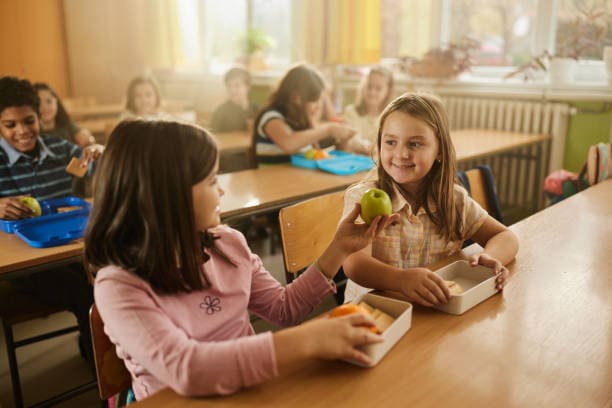
Sharing is a key social skill that helps children develop empathy, cooperation, and stronger relationships. Guided practice and positive reinforcement teach kindness, patience, and respect.
When we share with others, we give them part or all of something we have. We might give them something without expecting them to return it, or we might give them something then expect to get it back when they are done with it. For example, if you have two cookies, and you “share” a cookie with a friend, you don’t expect to get it back! However, if you “share” a favorite book with a friend, you most likely expect it back.
Encouraging Children to Share
Sharing plays an important part in bonding with the people around us. Children can develop the social skill of sharing through practice, patience, and the gentle guidance of adults. Here are some strategies you can use to encourage your children to share:
1. Be a role model
Model sharing with family members and friends. Explain to your children why you are sharing. For example, “I want to share my book with Daddy because I know he will enjoy reading it.”
2. Teach ways to share
If your children don’t always want to share, help them come up with a solution, like giving an alternative. For example, “I’m playing with the blue car right now, but here’s a fire truck you can use and we can play together.”
3. Share for short time periods
When children agree to share something for a little while, use a visual timer, like a Time Timer, or play/sing a song to help then understand the passage of time and when it is their turn again.
4. Keep special toys separate from other toys
If your children have special toys that they are less likely to share, put them in a different area when friends come over to play. Leave out a variety of toys that your children would be willing to share.

5. Use toys that encourage sharing
Toys such as puzzles, balls, and blocks encourage children to share and play together.
6. Praise your children when they share on their own
When you see your children sharing, let them know they made a good choice! For example, “I like the way you shared with your brother by letting him hold your Ipad.”
Conclusion
Sharing may seem like a simple act, but it is a powerful social skill that helps children build empathy, cooperation, and stronger relationships with others. By modeling sharing, providing guidance, and creating opportunities for practice, parents and caregivers can nurture this valuable habit in everyday life. Whether it’s offering a toy, lending a book, or playing together with friends, learning to share teaches children kindness, patience, and respect for others. With encouragement and positive reinforcement, children will not only understand the importance of sharing but also grow into thoughtful, compassionate individuals.
At New Horizons Wellness Services, our team is dedicated to supporting children and families in developing essential skills like sharing, communication, and emotional growth through a variety of services:
● Counseling Services – Helping children and families build emotional resilience, manage challenges, and foster positive relationships.
● Occupational Therapy Services – Supporting individuals in developing everyday skills for greater independence and success in daily life.
● Occupational Therapy for Adults – Assisting adults in strengthening practical skills, overcoming barriers, and enhancing overall well-being.
● Pediatric Occupational Therapy – Guiding children in developing fine motor, social, and self-care skills that encourage sharing, cooperation, and play.
● Social Skills Group – Providing a safe and supportive environment where children can practice important skills like sharing, turn-taking, and teamwork.
Contact us today to learn how we can support your child’s growth and help them thrive socially and emotionally!

Frequently Asked Questions
At what age do children typically start learning to share?
Children as young as toddlers may begin to show early signs of sharing, but true understanding often develops around ages 3–4. With guidance, patience, and encouragement, they gradually learn to share more willingly as they grow.
How can I handle situations when my child refuses to share?
It’s normal for children to resist sharing at times. Instead of forcing it, offer alternatives—such as letting them take turns or suggesting a different toy—so they feel they still have control while learning cooperation.
Why is sharing considered an important life skill beyond childhood?
Sharing goes beyond toys and playtime. As children grow, the ability to share helps them build stronger friendships, work effectively in teams, and develop empathy—skills that are essential for success in school, relationships, and adulthood.
Yours in Health,
New Horizons Wellness Services8880 SW Nimbus Ave Suite C.,
Beaverton, OR 97008
- https://g.page/newhws
New Horizons Wellness Services provides a true multidisciplinary approach to mental & physical health treatments for children, adults and families.