
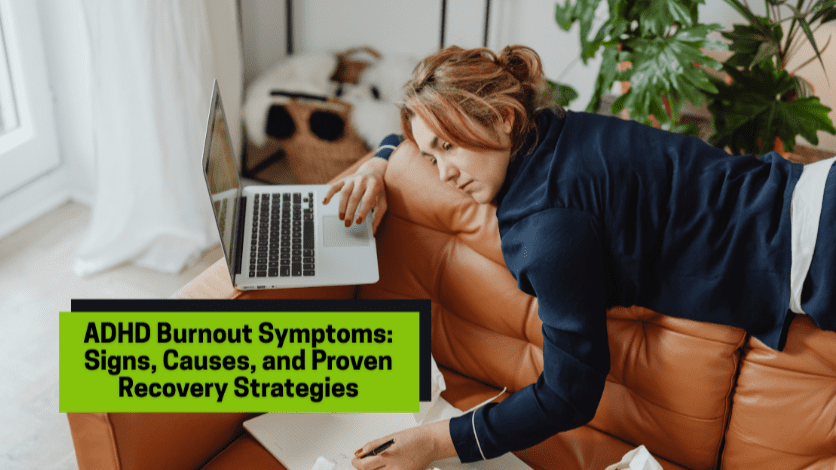
ADHD burnout is a state of physical and mental exhaustion caused by ongoing executive dysfunction and masking, occurring when coping demands exceed a person’s capacity.
ADHD burnout goes beyond mere fatigue; it represents a complete depletion of mental and physical energy due to the ongoing struggle to manage executive dysfunction and mask symptoms to meet neurotypical expectations. When the strain of overcompensating becomes too much, the system can shut down. Recognizing the signs, causes, and effective recovery strategies is crucial to transition from survival back to a balanced state.
What is ADHD Burnout and Why Does it Happen?
ADHD burnout involves a “system shutdown,” which means a person can lose the ability to accomplish tasks they once managed. Major symptoms include:
● Cognitive Fatigue: This involves severe brain fog and a noticeable decline in executive functions, such as planning and memory.
● Emotional Dysregulation: This can manifest as heightened irritability, frequent outbursts, or complete emotional numbness.
● Sensory Overload: Increased sensitivity to previously bearable stimuli like noise, light, or touch.
The main cause of ADHD burnout is the prolonged reliance on unsustainable coping methods.
● Masking and Camouflaging: The constant need to hide ADHD traits, like fidgeting or impulsivity, to seem “normal” is mentally draining. Over time, this behavior can exhaust mental energy reserves (Raymaker et al., 2020).
● Executive Overload: Many with ADHD depend on high-stress situations to complete tasks. Living in a constant “fight or flight” mode to meet deadlines raises cortisol levels, leading to eventual collapse (Hallowell & Ratey, 2021).
● The “Interest-Based” Conflict: Since the ADHD brain responds more to interests than importance, forcing focus on dull or repetitive tasks for extended periods creates significant internal conflict, causing quicker depletion of willpower (Barkley, 2012).
Common ADHD Burnout Symptoms You Shouldn’t Ignore
ADHD burnout worsens existing challenges and can result in a debilitating “system shutdown” or regression of skills.
Common Symptoms
● Total Executive Collapse: Once manageable Tasks, such as checking emails or doing chores, feel impossible, often leading to “ADHD Paralysis.”
● Heightened Sensitivity: There is a reduced tolerance for sensory input (noise/light) and increased emotional instability, which can include severe Rejection Sensitive Dysphoria (RSD).
● Profound Exhaustion: This results in deep mental and physical fatigue that rest cannot fix, often causing social withdrawal to conserve energy.
● Loss of Coping Skills: Typical organizational techniques become ineffective, leading to increased forgetfulness and difficulty in following conversations.

What Causes ADHD Burnout?
ADHD burnout usually does not stem from a single incident; instead, it is the result of a neurodivergent brain trying to function within a neurotypical framework. The main cause is the ongoing drain of cognitive and emotional energy without recovery.
1. The Cost of “Masking” (Camouflaging)
One of the main factors in burnout is masking, which involves intentionally or unintentionally suppressing ADHD traits to conform to social or professional norms. This may include forcing oneself to stay still, imitating neurotypical social cues, or hiding organizational struggles.
● The Mechanism: Constant self-monitoring creates a huge cognitive load that exhausts the prefrontal cortex faster than typical tasks (Raymaker et al., 2020).
2. Chronic Over-Correction and “Urgency” Reliance
Since the ADHD brain often doesn’t get enough dopamine for routine tasks, many people rely on adrenaline and cortisol (stress hormones) to get started.
● The Mechanism: Living in a constant state of “emergency” to meet deadlines or avoid shame fosters a high-stress situation. Eventually, the body’s stress response system depletes, causing mental and physical collapse (Hallowell & Ratey, 2021).
3. Executive Function Overload
Today’s world demands frequent task switching, managing notifications, and long-term planning, areas where the ADHD brain struggles.
● The Mechanism: When outside demands for organization and working memory consistently surpass the individual’s internal capacity, the brain’s executive system may “blow a fuse” to protect itself from further harm (Barkley, 2012).
4. Lack of “Dopamine-Rich” Recovery
● The Mechanism: The ADHD brain needs high-interest stimulation to manage mood and focus. When individuals are too busy or worn out to engage in enjoyable activities, they miss their primary source of mental rejuvenation (Solden & Frank, 2019).
Proven Recovery Strategies for ADHD Burnout
Recovering from ADHD burnout requires more than typical self-care; it involves a complete shift in how energy is managed and a deliberate reduction in cognitive load. Recovery focuses on calming the nervous system and rebuilding internal resources.
1. Radical Rest and “Low-Demand” Periods
The first move in recovery involves reducing demands. This means pinpointing non-essential tasks and removing them to allow the nervous system to escape its chronic fight-or-flight state.
● The Strategy: Incorporate low-stimulation breaks where the brain does not need to process new information (no scrolling, no podcasts).
● Evidence: Lessening the demand for executive control is the only way to let the prefrontal cortex recover from burnout (Barkley, 2020).
2. Strategic “Unmasking”.
Recovery is harder if significant energy is still spent trying to appear neurotypical. Unmasking means being honest about your needs and stopping performative behaviors in social situations.
● The Strategy: Identify scenarios where you can stop putting on a front, such as allowing yourself to fidget, avoiding eye contact if it is draining, or declining social invitations without guilt.
● Evidence: Studies show that reducing masking is a vital part of recovering from neurodivergent burnout and enhancing long-term mental health (Raymaker et al., 2020).
3. Transitioning from “Stress-Based” to “Interest-Based” Motivation
Many people with ADHD use anxiety or shame to drive productivity. Recovery involves shifting towards dopamine-driven motivators.
● The Strategy: Reintroduce play or hyperfocus activities that serve no purpose except enjoyment. These pursuits can help restore the ADHD brain’s dopamine levels.
● Evidence: Taking part in interest-led activities contributes to regulating the ADHD brain and lessens the effects of chronic stress (Hallowell & Ratey, 2021).
4. Externalizing Executive Function
During burnout, internal working memory often suffers. You need to stop trying to remember everything and rely on external systems.
● The Strategy: Use tools that require less effort, such as voice notes rather than writing, visual timers, or body doubling (working alongside someone else) to lower mental exertion when starting tasks.
● Evidence: Employing external support reduces the load on an exhausted executive system (Barkley, 2012).
When to Seek Professional Help for ADHD Burnout
While many people handle mild ADHD burnout through lifestyle changes, there are critical points where system shutdown demands clinical attention. Seeking help early can prevent a temporary crisis from evolving into a long-term mental health issue.
1. When Burnout Mimics or Coexists with Clinical Depression
It can be tough to tell apart ADHD burnout and Major Depressive Disorder (MDD). If symptoms like “numbness” or apathy continue even after major stressors are removed, professional evaluation is needed.
● The Indicator: Anhedonia, the inability to feel pleasure, even in enjoyable hobbies or hyper-fixations.
● Evidence: ADHD often occurs with mood disorders; chronic stress from unmanaged ADHD can lead to depression (Barkley, 2020).

2. Loss of Functional Ability
When ADHD paralysis extends to fundamental self-care activities, like forgetting to eat, neglecting hygiene for days, or finding it hard to get out of bed, professional help may be necessary.
● The Indicator: Facing severe consequences such as job loss, eviction, or broken relationships due to your inability to function.
● Evidence: Professional help can establish supports that relieve pressure on the prefrontal cortex (Hallowell & Ratey, 2021).
3. When Physical Symptoms Surface
Chronic cortisol elevation from ADHD-related stress can lead to physical problems that need medical attention.
● The Indicator: Unexplained chronic pain, severe migraines, or digestive issues that appear along with mental exhaustion.
● Evidence: The physical toll from ongoing neurodivergent stress can result in systemic health problems (Raymaker et al., 2020).
Take the Next Step Toward Managing ADHD Burnout with Support from NHWS
Taking the initial step towards recovery can be the hardest part of the ADHD burnout cycle. If you feel overwhelmed by executive dysfunction and ongoing exhaustion, professional support can offer the structure you need to rebuild your life. At New Horizons Wellness Services (NHWS), we provide tailored support to meet the unique needs of neurodivergent individuals. Our approach focuses on:
● Mental Health Care: Addressing the links between ADHD, anxiety, and burnout to support the whole person, not just the symptoms.
● Skill-Building for Executive Function: Moving beyond willpower towards practical systems that align with how your brain works.
● Empathetic Support: A space where you can “unmask” and explore your needs without the pressure of neurotypical expectations.
Whether you need assistance with emotional regulation, medication management, or building a more sustainable daily routine, our team at New Horizon Wellness Services is equipped to help you move from survival mode back to a state of thriving.
Explore their services and start your recovery journey today. Book a call now!

Frequently Asked Questions
How do I know if what I’m feeling is ADHD burnout or just regular stress?
Regular stress is usually temporary and tied to specific events, with energy returning after a short break. In contrast, ADHD burnout is a total “system shutdown” that rest alone cannot fix, often resulting in skill regression where previously simple tasks feel impossible to complete.
Can ADHD burnout go away on its own, or do I need treatment?
ADHD burnout requires active intervention because it is caused by a fundamental mismatch between environment and capacity. Recovery involves:
● Self-Management: Adjusting daily load and using external tools to support executive function.
● Professional Support: Necessary if burnout is paired with shame, mental health struggles, or physical symptoms.
While independent recovery is possible, professional help provides the “scaffolding” needed for a faster, more sustainable recovery.
What kind of therapy helps with ADHD burnout symptoms?
Effective ADHD burnout counseling focuses on nervous system regulation and skill building. Key approaches include CBT for reframing urgency, DBT for emotional grounding, ACT for aligning with personal energy levels, and Somatic Therapy for releasing Effective ADHD burnout support focuses on calming the nervous system and rebuilding everyday functioning skills. Common approaches include Cognitive Behavioral Therapy (CBT) for managing unhelpful thought patterns and urgency, Dialectical Behavior Therapy (DBT) for emotional regulation, Acceptance and Commitment Therapy (ACT) for aligning actions with personal values and energy levels, Somatic Therapy for releasing physical stress, and Occupational Therapy (OT) to strengthen executive functioning and support practical daily routines..
Can ADHD burnout go away on its own, or do I need treatment?
ADHD burnout requires active intervention because it is caused by a mismatch between demands and cognitive capacity. Recovery typically involves reducing overload, rebuilding routines, and using external supports to ease executive dysfunction. Professional support can also help when burnout is severe or linked with anxiety, depression, or functional impairment.
Can untreated ADHD make burnout worse over time?
Yes. Untreated ADHD creates a compounding cycle of exhaustion. Without proper support, you must constantly over-rely on stress and “masking” to function, which leads to more frequent and severe “system shutdowns” that take longer to recover from each time.
Yours in Health,
New Horizons Wellness Services8880 SW Nimbus Ave Suite C.,
Beaverton, OR 97008
- https://g.page/newhws
New Horizons Wellness Services provides a true multidisciplinary approach to mental & physical health treatments for children, adults and families.