
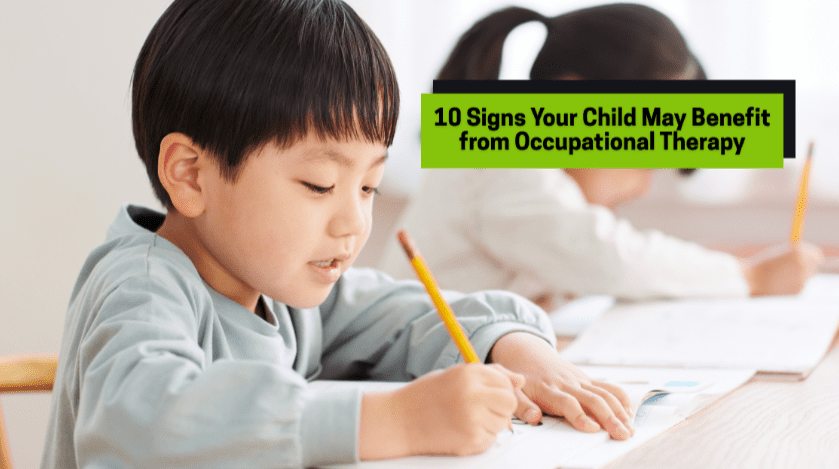
If your child struggles with handwriting, daily routines, focus, coordination, or independence, these may be signs your child needs occupational therapy to build confidence and everyday life skills.
Sometimes, the signs are easy to miss at first. Your child may seem bright, curious, and eager to learn, but certain everyday tasks still feel unusually difficult for them. You might notice that getting dressed takes much longer than expected, handwriting becomes frustrating, or simple routines often end in tears and exhaustion.
As a parent, it can be difficult to tell what is part of normal development and what may need extra support. Learning the signs that your child needs occupational therapy can give you a clearer understanding of what your child may be struggling with behind the scenes.
The good news is that early support can make a meaningful difference. In this guide, you will learn about common challenges that may point to a need for occupational therapy, how therapy works, and when it may be time to seek an evaluation.
What Is Occupational Therapy?
Many parents assume occupational therapy only helps children with major developmental challenges. In reality, it can support children who simply need extra help developing important life skills. Some children struggle with coordination, while others have trouble staying organized or handling sensory experiences.
Occupational therapy for children focuses on helping kids build the skills they need for everyday life. These skills include handwriting, dressing, eating independently, focusing in class, following routines, and managing sensory input.
An occupational therapist looks at how your child moves, learns, reacts to their environment, and completes daily tasks. If certain skills are delayed or difficult, occupational therapy sessions are designed to help strengthen those areas through activities that feel engaging and age-appropriate.
Occupational therapy can support a wide range of age groups, from toddlers and preschoolers to school-age children and teenagers. Some children begin occupational therapy as early as infancy if developmental delays are noticed, while others start later when academic, behavioral, or daily living challenges become more noticeable. The right age for occupational therapy depends on your child’s individual needs, not a specific number.
The goal is to help your child participate more comfortably in daily life. Occupational therapy supports growth while helping reduce frustration for both children and parents.
How Does Occupational Therapy for Kids Work?
Every child’s treatment plan is different because every child has different needs. An occupational therapist starts by evaluating your child’s strengths and areas where support may help.
Personalized Assessments
The occupational therapist observes how your child performs tasks such as writing, holding utensils, following directions, or completing self-care routines. They may also ask questions about behavior at home and school. This process helps identify specific challenges that affect your child’s daily functioning. The occupational therapist then creates goals that match your child’s needs.
Skill-Building Activities
Therapy sessions often include games, movement activities, sensory exercises, handwriting , and fine motor tasks. These activities are designed to help children improve while still having fun. For younger children, sessions may feel like playtime. Older children may work on school-related tasks or daily living skills in structured ways.
Parent Involvement
Parents are an important part of the occupation therapy process. Therapists usually provide activities or strategies you can continue at home. Consistency between therapy sessions and home routines often helps children progress more effectively. Open communication also allows occupational therapists to adjust strategies based on your child’s progress.

10 Signs Your Child May Benefit from Occupational Therapy
1. Difficulty Holding a Pencil Correctly or Using an Immature Grip
One of the early signs that your child needs occupational therapy is difficulty holding writing tools properly. Your child may grip the pencil too tightly, use an awkward position, or switch hands frequently while writing. These struggles can make school tasks exhausting and uncomfortable. Some children may complain about hand pain after short writing activities. Others may avoid tasks that involve drawing or writing altogether.
It is important to understand that fine motor skills involve the small muscles in the hands and fingers. These muscles are needed for writing, buttoning clothes, and using scissors. If these skills are not developing as expected, your child may have trouble keeping up with classroom tasks. Therapy can help strengthen hand muscles and improve coordination through targeted activities. Over time, children often gain better control and confidence during writing tasks.
2. Poor or Inconsistent Handwriting That Is Hard to Read
Some children struggle to size letters correctly or place them neatly on a page. Their handwriting may look uneven, crowded, or difficult to understand. This can affect school performance because teachers may have trouble reading assignments.
Children with handwriting difficulties often work much harder than their peers to complete simple assignments. Writing may take longer and require constant corrections. This can lead to frustration, tears, or avoidance of homework. Through kids’ occupational therapy, children can gain hand control, spacing, posture, and coordination skills that support clearer handwriting. Therapy also helps reduce the stress connected to writing activities.
3. Avoidance of Writing or Coloring Tasks
If your child constantly avoids coloring, drawing, or crafts, there may be an underlying skill challenge involved. Some children avoid these activities because they struggle with the sensory input such as the feeling of paint or glue getting on their hands.. Others may feel discouraged when their work does not look how they want it to. Repeated frustration can make children lose interest in activities they once enjoyed. Avoidant behaviors are often worth paying attention to.
4. Struggles to Complete Homework Without Constant Support
Many parents notice that homework becomes a daily battle. Your child may need frequent reminders, redirection, or hands-on help to finish assignments. While occasional support is normal, ongoing dependence may indicate skill gaps in attention, organization, or motor development. Homework struggles can also affect family routines and increase stress at home. Support from therapy can help children become more independent learners.
5. Difficulty Focusing, Organizing Tasks, or Following Multi-Step Instructions
Children who struggle with attention may have difficulty completing activities without constant reminders. They may start tasks but become distracted easily. Some children appear restless or unable to sit still long enough to finish assignments. These challenges can affect academic performance and daily routines. Occupational therapy can provide tools and strategies that improve focus and self-regulation.
Moreover, following instructions involves listening, processing information, and remembering steps in order. Children who struggle with this may miss important details during classroom activities. At home, routines like cleaning up or getting ready for school may become frustrating. Therapists work on attention, memory, and organizational strategies through structured activities. These skills often improve with practice and consistency.
6. Frustration or Emotional Outbursts During School-Related Tasks
Children sometimes express frustration through crying, yelling, or shutting down. School tasks may trigger these reactions when children feel overwhelmed or incapable. This does not always mean a child is being defiant. In many cases, they are struggling with skills they cannot fully manage yet. Understanding the root cause can help parents respond with patience and support.
When it comes to confidence, repeated struggles can make children doubt their abilities. They may begin saying things like “I can’t do it” or “I’m bad at school.” Over time, this can affect motivation and participation in class. Occupational therapy for children often focuses on building confidence alongside skill development. Small successes during therapy can help children feel more capable in everyday situations.

7. Difficulty Dressing (Buttons, Zippers, Tying Shoes)
Getting dressed requires coordination, hand strength, sensory processing and sequencing skills. Some children struggle with buttons, snaps, or zippers long after peers have mastered them. These difficulties can make morning routines stressful for both children and parents. Children may also avoid clothing items that feel challenging to manage independently. Occupational therapy can help improve the motor skills needed for dressing tasks.
Independence is an important part of child development. If your child still depends heavily on adults for dressing tasks beyond an expected age range, additional support may help.
8. Struggles With Basic Hygiene Routines Like Brushing Teeth or Bathing
Some children dislike the feeling of toothpaste, water, soap, or hair brushing. These sensory sensitivities can make hygiene routines difficult every day. Children may resist brushing teeth, washing hair, or bathing because the sensations feel overwhelming. This can lead to stress and conflict during routines. Therapists can help children gradually tolerate these experiences more comfortably.
Occupational therapy sessions often focus on improving independence through repetition and practical strategies. Parents are usually given techniques to continue practicing at home. These supports can help routines feel more manageable over time.
9. Trouble Using Utensils or Managing Mealtimes Independently
Children who struggle with fine motor control may have trouble using utensils effectively. They may spill food often or avoid certain foods because eating feels difficult. Others may become overwhelmed by food textures, smells, or sounds around them. These sensory challenges can affect eating habits and family mealtime routines. It can become frustrating if your child depends heavily on assistance during feeding. These challenges may also affect confidence in social settings like school lunches. Occupational therapists often help children become more comfortable with sensory experiences during meals. They can also assist in strengthening coordination and improving utensil skills gradually.
10. Avoidance of Age-Appropriate Daily Routines or Needing Excessive Assistance
Lastly, one of the common signs your child needs occupational therapy is ongoing dependence during daily activities. Your child may avoid tasks they are expected to handle independently for their age. This can include cleaning up toys, organizing school materials, or completing simple routines. Excessive assistance can affect confidence and slow independence development. Therapy focuses on helping children build practical life skills gradually.
Children often avoid activities that feel difficult or stressful. If your child regularly refuses certain routines, there may be underlying challenges involved. These behaviors are not always laziness or stubbornness. Sometimes children avoid tasks because they lack the skills needed to complete them comfortably. Occupational therapy for children can help them practice these skills in supportive ways that reduce frustration.
When to Seek an Occupational Therapy Evaluation
If your child’s struggles are affecting school performance, social participation, emotional well-being, or daily routines, it may be time to seek an evaluation.
You do not need to wait until challenges become severe before asking for help. Early support can often make daily life easier for both children and parents. An evaluation helps identify your child’s strengths and areas where support may improve independence and confidence.
It is also important to trust your instincts as a parent. If you consistently notice challenges that interfere with your child’s ability to participate comfortably in daily activities, seeking guidance can provide clarity and support.
Supporting Your Child’s Independence and Confidence With Support From New Horizons Wellness Services
At New Horizons Wellness Services (NHWS), families receive compassionate support designed around each child’s unique needs. Our occupational therapists understand that every child develops differently, and therapy should feel supportive, encouraging, and personalized.
NHWS offers occupational therapy for children focused on helping kids strengthen everyday skills at home, at school, and in social environments. Our therapy sessions are designed to help children improve independence, confidence, motor skills, emotional regulation, and daily functioning.
In addition, our team also works closely with parents to create goals that feel realistic and meaningful for everyday life. We ensure families are fully guided through the process with patience, education, and consistent communication.
If you have noticed several signs that your child needs occupational therapy, reaching out to us for professional guidance can be life-changing in helping your child thrive. Book a call now!

Frequently Asked Questions
How long does a child usually need occupational therapy?
The length of therapy depends on your child’s needs and goals. Some children attend therapy for a few months, while others benefit from longer-term support. Progress often depends on consistency, participation, and practice at home. Therapists regularly evaluate progress and adjust goals as needed. Your child’s therapist can provide a more personalized timeline after an evaluation.
What happens during a child’s first occupational therapy session?
The first session usually focuses on evaluation and observation. The therapist may ask questions about your child’s development, routines, school performance, and daily challenges. Your child may complete activities involving play, movement, handwriting, or self-care tasks. These observations help the therapist understand your child’s strengths and areas of difficulty. Afterward, therapy goals and recommendations are discussed with parents.
Will occupational therapy look like schoolwork for my child?
Most therapy sessions are designed to feel engaging and interactive. Occupational therapists often use games, movement activities, crafts, and hands-on exercises to build skills naturally. Children usually do not feel like they are sitting through traditional classroom lessons. The activities are carefully chosen to support development while keeping children motivated.
How involved are parents in occupational therapy sessions?
Parents are usually very involved throughout the therapy process. Therapists often provide updates, strategies, and activities that can continue at home. This teamwork helps reinforce progress between sessions. Parents also help therapists understand how challenges appear in everyday life. Open communication helps create better outcomes for children.
When should I expect to see improvements from occupational therapy?
Every child progresses at a different pace. Some children show improvements within a few weeks, while others need more time to build skills gradually. Small improvements often happen first, such as increased confidence or reduced frustration during tasks. Consistent attendance in therapy sessions and home practice can support progress.
Yours in Health,
New Horizons Wellness Services8880 SW Nimbus Ave Suite C.,
Beaverton, OR 97008
- https://g.page/newhws
New Horizons Wellness Services provides a true multidisciplinary approach to mental & physical health treatments for children, adults and families.