
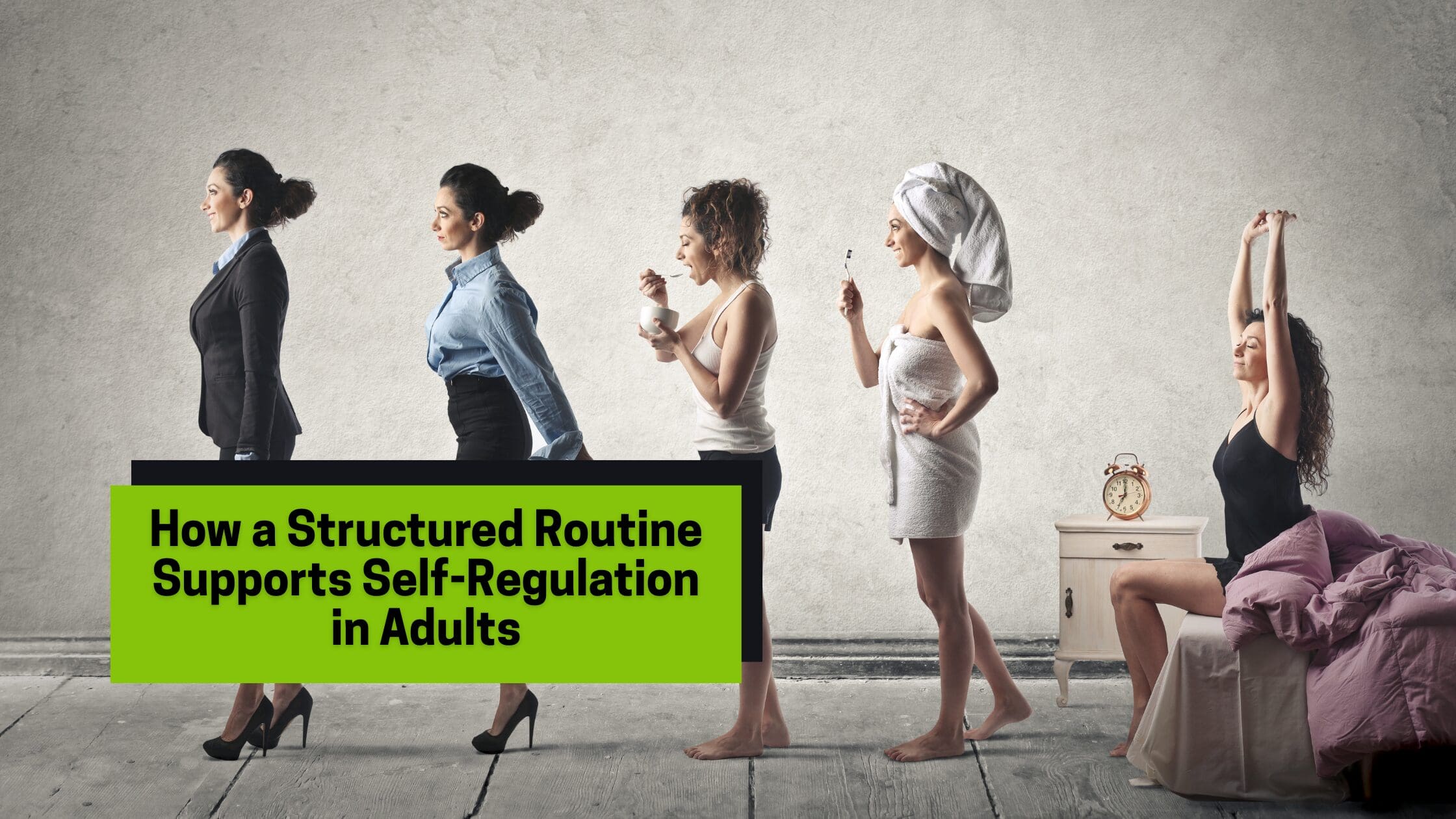
A structured routine helps you manage emotions, behavior, and focus by setting predictable rhythms in your day that reduce stress and boost your sense of control over life. Through consistent habits, self-regulation for adults is strengthened by lowering emotional reactivity and increasing intentional response patterns. This means your mood and behavior respond to what matters, not what just pops up unexpectedly.
Why do some days feel manageable while others spiral so fast?
You might wake up with good intentions, but by midday, you feel scattered, tense, or emotionally drained. Nothing dramatic happened, yet everything feels harder than it should. This is often what daily life looks like without a structured routine.
When your day has no clear flow, your brain stays on high alert, constantly deciding what to do next. Over time, that mental strain makes emotional control harder to maintain. According to the American Psychological Association, predictable routines help reduce stress by giving the brain a sense of order and emotional safety. A routine gives you a steady rhythm so your mind and body are not always playing catch-up. This steady rhythm plays a key role in self-regulation, helping you respond to life instead of reacting to it.
What Self-Regulation Means in Adult Daily Life
Self-regulation is something you use every day, even if you do not name it
Self-regulation for adults is how you manage your emotions, thoughts, and actions during everyday situations. You practice self-regulation when you choose to start your morning calmly instead of rushing. You rely on it when you manage disappointment without letting it derail your entire day. You use it when you stick to a routine even after plans change unexpectedly. You also depend on it when you balance responsibilities and still protect time for rest.
Moreover, you use it when you pause before responding to something frustrating. You use it when you follow through on a plan, even when your energy feels low. You also use it when you notice stress building and decide to take a break instead of pushing harder. These moments add up, shaping how stable and capable you feel over time.
Self-regulation helps you stay connected to your goals instead of being pulled around by every emotional shift. Harvard Health Publishing notes that self-regulation allows adults to manage emotional reactions and behaviors in ways that support long-term well-being.
How Structured Routines Support Emotional and Behavioral Regulation
Predictability helps your nervous system stay calm
A structured routine gives your day a predictable flow. When your brain knows what comes next, it does not need to stay on constant alert. This lowers emotional tension and helps your nervous system stay balanced. Research shows that predictability reduces emotional overload and supports better emotional regulation. Over time, your reactions soften because your system feels safer. This makes it easier to handle stress as it comes.
Fewer daily decisions protect emotional energy
When you make decisions all day long, mental fatigue builds quickly. A routine removes many of those small decisions by creating consistency. You already know when you eat, work, rest, and reset. That saved energy supports emotional control and thoughtful behavior. According to the National Institutes of Health, reducing decision fatigue improves impulse control and emotional regulation in adults.
Regular timing supports emotional balance
Your body responds strongly to consistency. Eating, sleeping, and resting at similar times supports mood stability and focus. When physical needs are met consistently, emotional reactions become easier to manage. Research from the Sleep Foundation shows that consistent daily schedules support mood regulation and attention. This physical stability supports self-regulation by keeping your system balanced throughout the day.
Repetition builds follow-through
A routine helps turn intentions into actions. Instead of hoping you will feel motivated later, tasks have a place in your day. This consistency supports behavioral regulation, especially during stressful periods. Over time, repeated actions strengthen trust in yourself. You begin to feel more capable and reliable.
Built-in pauses help you notice emotions sooner
A good routine creates natural check-in points. Morning routines allow you to notice your emotional state early. Midday routines help you reset when stress builds. Evening routines support emotional wind-down. These pauses help you respond before emotions feel overwhelming. Emotional awareness grows through regular reflection.
Clear structure supports healthy boundaries
Without structure, work and rest often blur together. A structured routine gives each part of your day a purpose. You know when to start and when to stop. This clarity protects your emotional energy and reduces burnout. Behavioral regulation improves because limits are built into your schedule.
Consistency strengthens long-term self-regulation
Self-regulation grows through practice. Each time you follow your routine, you reinforce emotional and behavioral stability. Progress comes from repetition, not perfection. Over time, your responses become calmer and more intentional. This is how self-regulation for adults develops sustainably.

The Role of Occupational Therapy in Building Sustainable Adult Routines
Occupational therapy focuses on real daily life
Occupational therapy looks at how you function in your actual day, not just how you feel in a session. Occupational therapists help you examine routines, habits, and environments that affect regulation. The goal is not to add more tasks, but to support smoother daily functioning. According to the American Occupational Therapy Association, OT helps adults develop routines that support emotional regulation and independent living.
Routines are designed around your life
OT does not use one-size-fits-all routines. Your structured routine is built around your responsibilities, energy levels, and values. Occupational therapists help you place demanding tasks where you function best and plan rest where it supports recovery. Research shows that personalized routine-based interventions improve executive functioning and emotional control. This personalization increases long-term success.
Occupational therapy emphasizes practice in real contexts. You apply strategies at home, work, and in daily responsibilities. This strengthens carryover and confidence. Skills become habits because they are practiced consistently. This approach supports lasting self-regulation.
How Counseling Helps Adults Maintain Routines and Emotional Balance
Counseling strengthens emotional awareness
Counseling helps you slow down and notice emotional patterns that quietly influence your routines. You begin to recognize how stress, anxiety, or fatigue show up before routines start to slip. This awareness makes it easier to respond early instead of waiting until you feel overwhelmed.
For example, noticing that irritability increases before you skip meals or sleep helps you adjust your routine proactively. Research in psychotherapy shows that emotional insight improves self-regulation outcomes in adults by increasing intentional responses rather than reactive behaviors. With greater awareness, routines feel supportive and responsive to your needs instead of something you force yourself to follow.
Counseling supports motivation during hard seasons
Motivation changes depending on stress, health, and life demands. Counseling helps you stay engaged with routines when energy feels low or life feels heavy. Emotional support allows you to explore what is making routines difficult instead of assuming failure.
For example, during burnout or grief, counseling can help you simplify routines while preserving emotional stability. According to counseling research, supportive therapeutic relationships improve follow-through by reducing emotional avoidance. This guidance protects consistency even when your capacity feels limited.
Coping tools support routine stability
Counseling provides practical tools that help manage emotional spikes so routines stay steady. Techniques such as grounding, emotional labeling, and stress regulation help you pause instead of reacting impulsively. These skills are especially helpful when unexpected disruptions threaten your structure.
Research shows that using a structured routine alongside coping strategies improves emotional balance and daily functioning. With these tools, routines become a source of stability rather than something that collapses under pressure.
Counseling supports routine flexibility
Life does not stay still, and routines need room to shift without falling apart. Counseling helps you recognize when a routine no longer fits your current season instead of pushing yourself to maintain something that adds stress. Through counseling, you learn how to adjust structure in small, realistic ways while still keeping the parts that support emotional balance.
For example, during a job change, health issue, or family transition, a counselor can help you scale back expectations without abandoning helpful routines altogether. According to the American Counseling Association, emotional support during change improves adaptability and reduces emotional overload. This guidance allows you to stay regulated while your routine evolves alongside your life.
Self-compassion strengthens consistency
Counseling also helps you develop self-kindness when routines break down, which happens to everyone. Without self-compassion, missed routines often lead to frustration or self-criticism, making it harder to restart. Counseling supports you in responding to setbacks with understanding rather than blame, which keeps emotional regulation intact.
Research in mental health counseling shows that self-compassion improves emotional resilience and supports long-term behavior change. When you treat yourself with patience, routines become easier to return to, and consistency feels achievable instead of exhausting.

How OT and Counseling Work Together to Improve Adult Self-Regulation
Action and emotion are addressed together
Occupational therapy (OT) focuses on what you do, like your daily routines, habits, and functional tasks, while counseling focuses on how you feel and how emotions influence behavior. When these two approaches work together, self-regulation is addressed from both directions. Emotional states affect follow-through, and routines influence emotional stability. When routines are designed with emotional needs in mind, they become easier to maintain. At the same time, emotional insight helps routines feel purposeful instead of restrictive.
Shared goals support progress
OT and counseling work toward aligned goals rather than separate outcomes. Emotional insights gained in counseling inform how routines are structured in OT, and routines developed in OT support emotional regulation goals discussed in counseling. This shared focus prevents mixed messages and helps progress feel steady and intentional. Instead of working on behavior in one space and emotions in another, both therapies reinforce the same direction of growth.
Skills are reinforced across settings
Skills learned in counseling, such as emotional awareness, coping strategies, or stress management, support routine follow-through outside of therapy. Meanwhile, the daily structure created in OT provides consistent opportunities to practice those emotional skills.
Repetition across environments strengthens self-regulation and helps habits stick over time. This reinforcement makes progress more sustainable because skills are applied in everyday life, not just discussed in theory.
Adapting Routines for Adults With Anxiety, ADHD, or Life Transitions
Adapting a structured routine for your unique needs starts with understanding how your brain and body respond to stress, distraction, or change.
For adults with anxiety, routines can feel overwhelming if they are too rigid or overly packed. The goal is to create a predictable framework while allowing small choices and flexibility within the day. For example, you might keep consistent wake-up and meal times but leave open blocks for breaks or calming activities when anxiety spikes. Counseling can help you identify triggers and teach strategies to stay regulated when unexpected stress disrupts your day, while occupational therapy can help design routines that feel achievable rather than exhausting.
For adults with ADHD, adaptation often means breaking larger tasks into smaller, clear steps and creating visual or time-based cues to stay on track. Instead of scheduling long work blocks that can lead to distraction or fatigue, routines can include shorter focus periods interspersed with planned breaks. Using reminders, checklists, or timers reinforces consistency and reduces mental overload. Research shows that these structured, repetitive patterns improve behavioral regulation and follow-through in adults with ADHD. OT can help design these routines in practical ways that fit your life and provide strategies for emotional self-regulation when motivation dips or frustration builds.
Life transitions, such as moving to a new city, starting a new job, or navigating family changes, often disrupt even the most well-established routines. During these periods, flexibility becomes just as important as consistency. Rather than abandoning your routine entirely, adapting it might mean prioritizing essential tasks while letting less critical activities shift. Counseling can guide you in managing the emotional stress of transitions, while OT can adjust routines to ensure they remain realistic and supportive. Together, this dual approach allows you to maintain a structured routine that balances predictability with adaptability, helping you navigate anxiety, ADHD, or life changes without feeling overwhelmed.
Key strategies for adapting routines include:
● Keeping core activities consistent while leaving flexible time blocks for unexpected events.
● Breaking larger responsibilities into smaller, manageable steps.
● Using visual or auditory cues like alarms, planners, or checklists to reinforce structure.
● Checking in regularly with a counselor or OT to adjust routines as needs change.
● Practicing self-compassion to reduce stress when routines need to shift.
● By intentionally adapting routines in these ways, adults can maintain stability, improve focus, and support emotional regulation, even when life feels unpredictable.
Professional Support Options for Adult Self-Regulation from NHWS
New Horizons Wellness Services (NHWS) offers integrated occupational therapy and counseling designed to support self-regulation for adults through practical, evidence-based approaches.
Our occupational therapists help you design meaningful, sustainable routines that fit your life, energy, and priorities. Counseling supports emotional insight, coping skills, and motivational stamina so your routine becomes a source of support instead of pressure.
At New Horizons Wellness Services providers emphasize structure as a foundation for emotional and behavioral regulation, incorporating individualized plans that respond to your goals and life context. Whether you’re dealing with stress, anxiety, transitions, or executive function challenges, NHWS offers a caring, structured pathway to stronger self-regulation and a more balanced life. Contact us now!

Frequently Asked Questions
What should I expect when beginning occupational therapy to improve self-regulation as an adult?
You can expect a collaborative process. Your occupational therapist will learn about your daily patterns, emotional challenges, and goals. Together, you will identify places where a structured routine can support stronger self-regulation and then build routines that fit your life.
Is occupational therapy for self-regulation only helpful for people with a diagnosis?
No. Adults without a formal diagnosis can benefit, too. OT focuses on real-world functioning and daily routines, not just diagnostic labels. Anyone struggling with consistency, emotional balance, or daily planning can find value in OT support.
How are therapy goals for self-regulation created and adjusted over time?
Goals are set collaboratively based on what you want to improve. They are reviewed and adapted as your routines evolve and as you gain skills. This ensures your plan stays relevant and achievable.
What therapy formats are commonly used to support adult self-regulation?
Therapies can include individual OT sessions, counseling sessions, or a combination. Sessions may happen in-person or virtually, and your NHWS team will tailor the format to your needs and access.
How can progress made in occupational therapy carry over into daily routines?
Progress translates best when routines are practiced where you actually live and work. OT emphasizes real-life application, so what you learn in sessions is directly tied to your daily activities, making self-regulation more automatic over time.
Yours in Health,
New Horizons Wellness Services8880 SW Nimbus Ave Suite C.,
Beaverton, OR 97008
- https://g.page/newhws
New Horizons Wellness Services provides a true multidisciplinary approach to mental & physical health treatments for children, adults and families.