
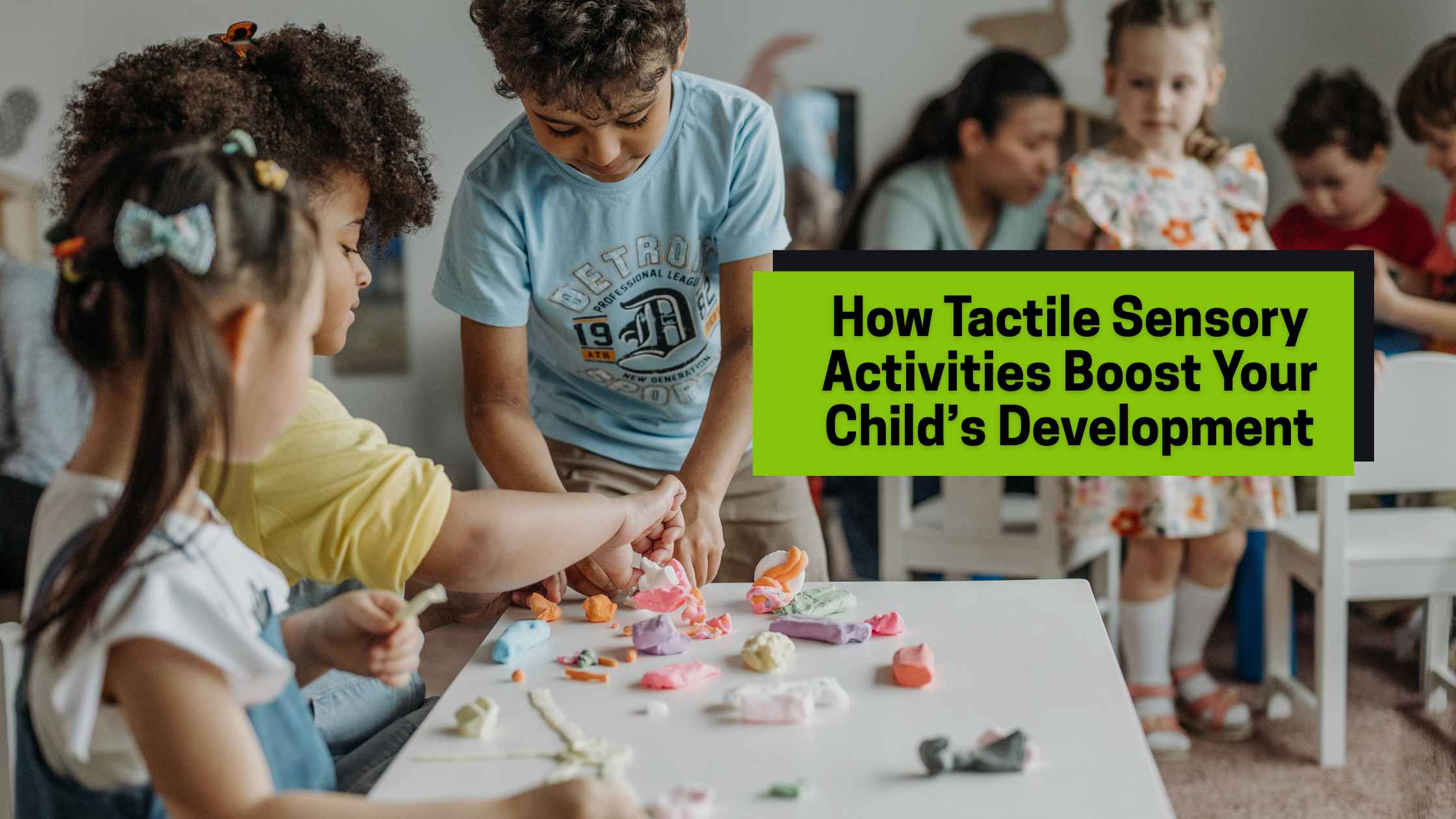
Tactile sensory activities support a child’s development by strengthening fine motor skills, sensory processing, focus, and emotional regulation through hands-on touch-based play experiences.
Children naturally seek out hands-on experiences such as squeezing playdough, pouring water back and forth between cups, or exploring bins filled with textured materials. These simple actions activate the tactile sensory system, which plays a key role in helping children process the world around them.
When you see a child repeating these motions, don’t rush to stop them. This kind of play is purposeful. It supports focus, emotional regulation, fine motor coordination, and cognitive growth. In fact, it’s often in these quiet, repetitive, and exploratory moments that some of the most important developmental work is taking place.
Tactile sensory activities help children become more aware of their bodies and surroundings. It supports brain development by strengthening neural pathways that connect sensory input with motor responses and behavior. This is why children who engage in tactile play regularly often show improvements in attention span, problem-solving, and self-soothing.
You don’t need a classroom full of specialized tools to get started. Most of what’s needed is already in your kitchen drawers or craft bins. In this blog, let’s take a closer look at different types of tactile sensory activities and the benefits they bring to children’s development.
What Are Tactile Sensory Activities?
Tactile sensory activities involve experiences that engage a child’s sense of touch. These include any tasks that involve feeling textures, temperatures, or materials through the skin. From squishing dough to running fingers through sand, these activities stimulate the tactile system and help children understand different sensory inputs.
Tactile sensory activities often include materials that are sticky, rough, smooth, bumpy, soft, cold, or warm. These can be natural or homemade, and they allow children to explore, create, and interact in ways that support fine motor development, problem-solving, and even emotional regulation.

Understanding the Tactile System
The tactile system is the sensory system that allows us to perceive touch through our skin. It helps us distinguish between different textures, temperatures, and pressures. The human body has nerve endings throughout the skin, which send messages to the brain about what we’re touching.
Some of these sensations reach conscious awareness, like the pain of a paper cut or the softness of a blanket, while others are filtered out. For example, we don’t constantly think about the feel of our clothes against our skin because the brain determines it’s not important at the moment.
When the tactile system is functioning well, it helps children process sensory information efficiently. This includes recognizing what is essential (like a painful stimulus) and what can be ignored. But if the tactile sensory processing system is immature or disorganized, it can result in all sensations being sent to the brain’s cortex. This overloads the brain, leading to difficulty concentrating, fidgeting, irritability, and even behavioral challenges.
That’s why supporting the development of a child’s tactile sensory processing system is essential, especially in the early years.
Why Tactile Sensory Activities Matter for Child Development
Tactile sensory activities are important because they help children build the foundation for many lifelong skills. They support:
Fine Motor Skills
Fine motor skills involve the small muscles in the hands and fingers. Children use these muscles when they zip a jacket, use scissors, color with crayons, or write with a pencil. Tactile activities like scooping, pinching, squeezing, rolling, and pouring give these muscles a workout.
Over time, this kind of play strengthens hand coordination, finger control, and grip strength. These are all essential for daily tasks like feeding themselves, buttoning shirts, or tying shoelaces.
Practicing these movements during play makes them more automatic and easier when it’s time to use them in real life.
Sensory Processing
Some children are sensitive to touch and may avoid getting messy, while others may constantly seek out tactile experiences. Tactile sensory play helps balance these responses.
For children who avoid textures, gradual exposure through play helps them get used to different sensations in a low-pressure way.
For children who crave touch, these activities can provide the input they’re looking for in a safe, structured environment.
Over time, this helps the brain organize sensory input more effectively, reducing meltdowns or overreactions to certain textures and helping children feel more comfortable in their surroundings.

Executive Functioning
Tactile sensory activities encourage thinking and problem-solving. As children explore materials that involve mixing, molding, pouring, or stacking, they begin to understand concepts like cause and effect. For example, they might discover that adding more water makes dough stickier or that pressing harder leaves a deeper impression in clay. These small discoveries help build reasoning skills, spark curiosity, and promote active learning. Many tactile activities also involve following directions, remembering steps, and making choices, which support memory and planning.
Interoception and Body Awareness
When children play with sensory materials, they also have opportunities to build awareness and put words to how their bodies feel. Describing textures (like “slimy,” “bumpy,” or “squishy”) helps children express their feelings or preferences.
Caregivers and educators can encourage this by asking questions like “What does that feel like?” or “Can you describe it?” Talking about what they’re doing while they play also strengthens their ability to communicate and describe their experiences.
Over time, this type of interaction supports better self regulation, and social communication.
Self Regulation
Many tactile sensory activities are calming and comforting. Playing with soft dough, squeezing a stress ball, or running hands through dry rice can help children relax and reset. This is especially helpful for children who become overwhelmed easily or who have trouble managing big emotions. The repetitive, soothing nature of tactile play can help them regulate their mood and regain focus.
When children feel calm and safe, they are better able to connect with others and engage in learning or play.
Social Skills
Tactile play often works well in group settings. Activities like making slime, building with sand, or playing with water tables encourage children to take turns, share tools, and talk about what they’re doing. This kind of shared experience builds cooperation and teaches important social skills.
Children learn how to work together, solve problems as a team, and respect each other’s space and preferences. These interactions support emotional intelligence and lay the groundwork for successful peer relationships.

Supporting Tactile Integration at Home: Guidelines and Sensory Textures
Creating a home environment that supports tactile sensory processing doesn’t have to be complicated. With a little preparation, you can set up simple tactile sensory activities that help your child learn and grow while having fun. Here are some practical tips to make the most of your time together.
Before You Start:
● Prepare Your Space
Choose a spot where it’s okay to get messy. Use towels, plastic mats, or newspapers to protect surfaces. Keep wipes or a damp cloth nearby for quick cleanups. Having the space ready ahead of time makes the activity more relaxed and enjoyable for both you and your child.
● Set Expectations
Before you begin, explain what the activity is and what you’ll be doing. Let your child know how long the activity will last and what will happen afterward (like clean-up time). Setting clear expectations helps your child feel more comfortable and makes transitions smoother.
● Consider Sensitivities
If your child is sensitive to certain textures, start small. Let them observe first or touch materials with tools like spoons or brushes instead of their hands. You can also encourage them to try touching with one finger before moving to full-hand exploration. Being patient and supportive helps them build confidence. Do not force your child to touch textures that they are not comfortable with
● Have Fun
Your enthusiasm makes a big difference. If you show interest and curiosity, your child is more likely to feel excited too. Don’t worry about the messes and focus on the experience and connection. Laughing and exploring together make the activity more meaningful.
During the Activity:
● Follow Your Child’s Lead
Let your child decide how involved they want to be. Some days they might dive right in, while other times they might prefer to watch or go slowly. Respect their pace. Being flexible encourages a sense of safety and builds trust.
● Encourage Exploration
Use simple questions to spark curiosity. Ask things like “How does that feel?” or “What happens if you add more water?” Questions like these invite your child to think, describe, and try new things without pressure.
● Model Interaction
Show your child different ways to use the materials. You might poke the dough, roll it into a ball, or press objects into it. Demonstrating these actions gives your child ideas and shows them that there’s no one “right” way to explore.
● Celebrate Attempts
Praise your child for trying, even if things don’t turn out perfectly. Comments like “I saw how hard you worked on that” or “You were curious and tried something new” help build self-confidence and resilience.

After the Activity:
● Discuss the Experience
Take a moment to talk about what your child liked or didn’t like. You might ask, “What was your favorite part?” or “Was there anything that surprised you?” These conversations help children process the experience and learn from it.
● Connect to Learning
Point out what they practiced, such as measuring, problem-solving, or following steps. This helps children understand that play is also learning and gives them a sense of accomplishment.
● Plan Next Steps
Ask your child if there’s something they’d like to do differently next time or what material they’d like to try. Planning future activities together builds anticipation and gives your child a sense of choice and control.
10 Fun Tactile Sensory Activities to Boost Your Child’s Development
These activities engage your child’s tactile system in playful and meaningful ways. Each activity supports skills like sensory processing, motor coordination, self-regulation, and executive functioning.

1. Slime
Ingredients:
● 1 4-6 oz bottle of white liquid all-purpose glue or washable school glue
● 1/2 teaspoon baking soda
● 1½ tablespoon buffered or multipurpose contact lens solution
● Optional: a few drops of liquid food coloring to give your slime color
● Optional: Add 2 tbsp up to 1/2 cup warm water to make your slime stretchier and oozier.
Instructions:
● Pour the glue into a big bowl.
● In a smaller bowl or cup, mix together the baking soda, contact lens solution, and food coloring (if you want color).
● Pour the small bowl mixture into the glue and stir with a spoon or use your hands.
● The slime will feel sticky at first, but keep squishing and kneading, and it will get better!
● Want thicker slime? Add a tiny bit more baking soda. Want stretchier slime? Add a little water.
Benefits:
Slime is great for squeezing, pulling, and stretching, all of which strengthen the hands and fingers. These repetitive movements are also calming and help regulate mood. The sticky texture supports tactile sensory processing, especially for children who tend to avoid or overreact to certain sensations. It also allows kids to explore cause and effect as they mix ingredients.
2. Erupting Snow
Ingredients:
● ¼ cup baking soda
● 1 Tbsp vinegar
● Blue glitter
● 2–3 squirts of shaving cream
Instructions:
● Mix baking soda, shaving cream, and glitter in a bowl.
● Slowly pour vinegar over the top and observe the eruption.
Benefits:
This activity offers a blend of visual and tactile input. The cool, foamy texture is soothing, while the fizzing reaction sparks curiosity and engagement. Children use fine motor skills when mixing and scooping, and also learn to make predictions and observe outcomes.
3. Rubbery Marshmallow Dough
Ingredients:
● ½ cup marshmallow fluff
● ½ cup cornstarch
● 1 tsp oil
Instructions:
● Mix marshmallow fluff and oil (you can warm the fluff for easier handling).
● Gradually add cornstarch until a dough forms.
Benefits:
This soft, slightly sticky dough is perfect for tactile sensory play. It offers multiple textures (smooth, squishy, slightly stretchy), giving children the chance to explore and compare sensations. The scented element adds an olfactory component, making it a multi-sensory experience. Working with the dough strengthens small hand muscles and supports fine motor coordination.

4. Kool-Aid Play-Dough
Ingredients:
● 1 cup flour
● ¼ cup salt
● 1 packet Kool-Aid
● ⅔ cup boiling water
● 1 Tbsp oil
Instructions:
● Mix dry ingredients.
● Add oil and slowly add hot water, stirring until dough forms.
Benefits:
The unique scent and bright color make this playdough especially fun. Children strengthen fine motor skills by rolling, flattening, and shaping the dough. The process of making it also introduces simple cooking steps. The scent can also serve as a calming influence during play, supporting emotional regulation.

5. Moon Sand
Ingredients:
● 2 cups brown sugar
● 2 cups corn starch
● 10 Tbsp vegetable oil
Instructions:
● Combine dry ingredients.
● Add oil and mix until it holds shape but crumbles easily.
Benefits:
Moon sand mimics the experience of wet sand but is easier to manage indoors. Children love scooping, pouring, and shaping it with cups or molds. These movements promote coordination, strength, and sensory processing. The slow, repetitive motions involved in shaping and building can be soothing and help children relax.
6. Cooked Pasta Bin
Instructions:
● Boil spaghetti, drain, and cool.
● Add food coloring (optional).
● Place in a large bin for squishing and exploring.
Benefits:
Cold, slippery noodles provide strong tactile input and offer an ideal experience for children who seek bold textures. Exploring pasta helps children tolerate wet, squishy sensations. Scooping or transferring pasta with tongs or fingers boosts fine motor precision and supports self-help skills like feeding.
7. Sensory Rice
Instructions:
● Mix uncooked rice with food coloring and vinegar.
● Let dry, then pour into a bin with scoops, spoons, or small containers.
Benefits:
The fine texture of rice offers gentle, consistent tactile input. Digging, pouring, and transferring the rice helps with hand coordination and finger strength. Hiding small objects inside adds a layer of exploration and encourages problem-solving. It’s also a quiet, calming activity for children who need low-stimulation play.
8. Gel Bags
Instructions:
● Fill a ziplock bag with clear hair gel.
● Add buttons, beads, or glitter.
● Seal tightly with tape.
Benefits:
Gel bags are a mess-free option for children who are just beginning with tactile play. They can squish, push, and move objects around inside the sealed bag, developing finger strength and control. This also improves visual tracking and helps children with low sensory tolerance explore safely.

9. Cornmeal Writing Tray
Instructions:
● Pour cornmeal into a shallow tray.
● Encourage your child to draw or write with their finger.
Benefits:
Drawing or tracing letters on a textured surface strengthens hand control and supports early literacy. The rough feel of cornmeal offers rich tactile input and helps children refine finger movements. It’s also a great way to make writing practice more fun and interactive.
10. Nature Texture Hunt
Instructions:
● Collect natural items outdoors (leaves, rocks, bark, flowers).
● Examine how they feel and compare textures.
Benefits:
This outdoor activity encourages movement, observation, and connection with the environment. Feeling different natural textures builds tactile awareness and vocabulary. It also supports descriptive language as children describe what they feel. Walking and exploring add gross motor movement and build curiosity.
Get Help From Occupational Therapy
If your child shows strong reactions to touch, either avoiding it or constantly seeking it, this could be a sign that they need additional support for tactile sensory processing. Occupational therapists can assess your child’s sensory needs and provide a personalized plan.
At New Horizons Wellness Services (NHWS), we offer sensory-based therapy and support for children who may be struggling with tactile integration. Our experienced team works closely with families to develop goals and implement strategies that help children gain comfort, confidence, and control in their sensory world.
Pediatric Occupational Therapy, focuses on helping children improve their sensory processing, fine motor skills, executive functioning, self-regulation, and social skills in a supportive and engaging environment.
Contact us now to learn how we can support your child’s unique sensory journey and help your family thrive.

Frequently Asked Questions
How does the tactile system affect a child’s ability to focus and learn?
When the tactile system is well-developed, it filters out unimportant sensory input (like the feeling of clothes) and allows the brain to focus on tasks. If the tactile system is immature, all sensations are processed equally, leading to sensory overload. This makes it harder for children to concentrate, sit still, or complete tasks.
Why should children apply sensory textures themselves during tactile play?
Self-directed tactile play encourages independence, decision-making, and body awareness. When children touch, manipulate, and explore textures themselves, they learn more about their own sensory preferences and gain confidence in trying new things.
What kinds of tactile activities are best for encouraging emotional security?
Activities that involve warm, soft, or familiar textures like dough, soft fabrics, or sand can be calming and comforting. Repetitive tactile activities such as squeezing, rolling, or kneading are especially helpful for emotional regulation and grounding.
Yours in Health,
New Horizons Wellness Services8880 SW Nimbus Ave Suite C.,
Beaverton, OR 97008
- https://g.page/newhws
New Horizons Wellness Services provides a true multidisciplinary approach to mental & physical health treatments for children, adults and families.