
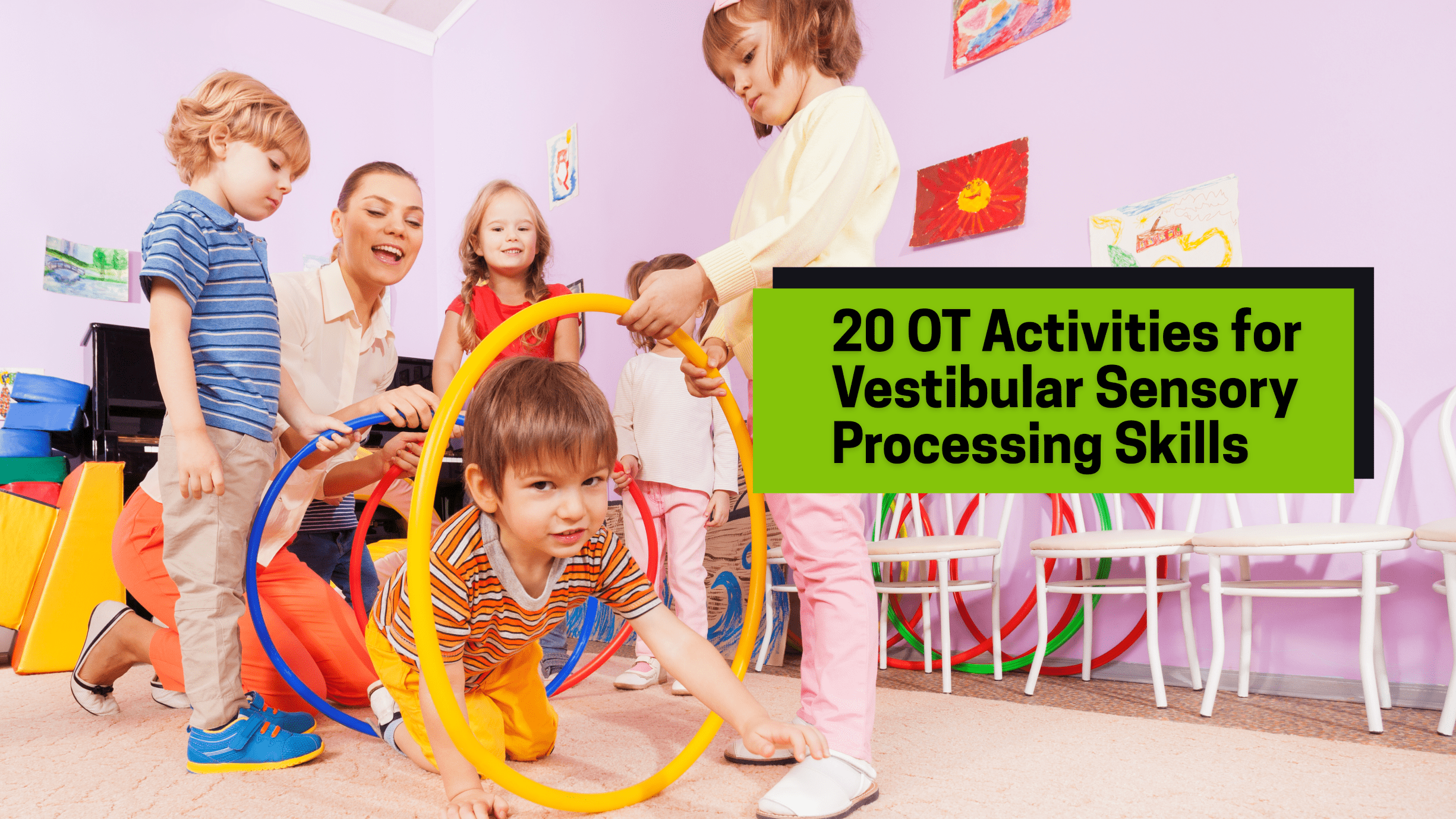
Vestibular sensory processing activities in occupational therapy help children improve balance, coordination, attention, and body awareness through structured, movement-based play exercises.
Are you also one of those parents who, when they hear the term “vestibular,” they’d immediately think it’s a complicated medical concept only specialists can understand?
To put it simply, it’s a skill set every child uses every single day, like running in the park, swinging at the playground, or even sitting still in class. When the vestibular sensory system isn’t working as it should, everyday activities can feel harder than they should be.
And here’s the surprising part: this challenge is far more common than most people realize. Many children with coordination, attention, or balance struggles may actually be facing vestibular sensory processing difficulties without anyone realizing it.
That’s where occupational therapy activities come in. These carefully designed and enjoyable activities can help strengthen a child’s vestibular skills, making daily life smoother, safer, and more enjoyable. The best part is that many of these activities can be done at home, in therapy sessions, or at school with minimal equipment, just some creativity and professional guidance.
This article will explain what vestibular sensory processing really means, how to identify challenges, and which occupational therapy activities can make a difference. It will also share 20 of the best activity ideas for improving vestibular skills so children can thrive in all aspects of life.
What Are Occupational Therapy Activities?
Occupational therapy activities are exercises or tasks that help people develop, improve, or regain skills needed for daily living. For children, these activities often focus on motor skills, sensory processing, self-care abilities, and play skills. They’re not random exercises; they are planned and guided by an occupational therapist to target specific developmental needs.
For example, a child who has trouble with coordination might work on games that encourage balance, hand-eye coordination, and motor planning. Another child who avoids certain movements because of discomfort might be guided through gentle activities that help them adapt and feel safe. The goal is always to make these activities meaningful, fun, and suited to the child’s unique needs.
What Are Vestibular Sensory Processing Skills?
Before diving into activities, it’s important to answer the question many parents have: What is vestibular sensory processing? This is the body’s ability to sense movement, balance, and spatial orientation through the inner ear’s vestibular system. It tells the brain how the body is moving and where it is in space. Without this system working well, a child may appear clumsy, tire easily during physical tasks, or struggle to stay focused in class.
A healthy vestibular system helps with coordination, posture, eye control, and even attention. It plays a role in activities as simple as walking without tripping, turning the head to look at something, or sitting upright at a desk. When a child’s vestibular processing isn’t functioning effectively, targeted intervention through therapy becomes important.

Why Occupational Therapy Activities Target the Vestibular System
Therapists know that a strong vestibular system is essential for a child’s ability to participate in daily life. That’s why occupational therapy activities often incorporate movement-based exercises designed to stimulate the inner ear’s balance system. These activities help the brain and body work together more effectively, improving everything from balance to emotional regulation.
Addressing vestibular needs also supports a child’s learning and attention. In fact, many children with attention challenges benefit from vestibular input because it helps organize the brain’s sensory processing systems. This can mean fewer meltdowns, better focus, and greater confidence in physical play.
Signs of Vestibular Sensory Processing Challenges in Children
Parents may notice certain patterns that could signal vestibular sensory processing difficulties. Some children avoid activities like swinging, climbing, or spinning, showing signs of discomfort when their head moves in certain ways. Others show vestibular sensory seeking behaviors, where they constantly crave movement, spinning in circles, rocking back and forth, or jumping excessively.
Other signs might include difficulty riding a bike, trouble with balance, frequent falls, or feeling anxious when moving quickly. These signs don’t always mean a child has a vestibular disorder, but they do suggest that evaluation by an occupational therapist might be beneficial.

Benefits of Vestibular-Focused Occupational Therapy Activities
Stronger Balance and Coordination
One of the biggest benefits of vestibular sensory activities is improved balance and coordination. Children who once struggled with walking across a beam, riding a bike, or playing sports often become steadier on their feet. With stronger coordination, they can move more smoothly and keep up with peers during physical play. This growth also makes daily routines, like climbing stairs or carrying a backpack, easier and safer.
Increased Confidence in Movement
As a child’s vestibular skills improve, so does their self-confidence. Activities that once felt intimidating, like sliding, swinging, or jumping, start to feel more manageable and enjoyable. This willingness to try new things helps them participate in playgroups and sports more actively. Over time, greater confidence in movement spills over into other areas of life, including social interactions and classroom participation.
Reduced Anxiety and Greater Comfort
Many children with vestibular challenges experience fear or anxiety when moving in certain ways. Therapy gradually introduces safe and controlled movement, helping children feel calmer and more comfortable. As they gain trust in their bodies, activities like spinning, climbing, or sliding become less stressful. This reduced anxiety often leads to a more positive outlook on physical play and group activities.
Improved Attention and Focus
The vestibular system influences how well the brain processes and organizes sensory information. When it is strengthened through occupational therapy activities, children often show improvements in attention span and self-regulation. They may sit more still during class, listen better to instructions, and transition between tasks with greater ease. These gains are especially noticeable in school settings, where focus is critical for success.
Support for Reading and Writing
For some children, challenges with vestibular sensory processing affect eye control, which is essential for reading and writing. By improving vestibular function, therapy can help the eyes move more smoothly across a page or track objects with greater accuracy. This translates to better reading fluency, fewer skipped words, and more consistent handwriting. Even small improvements can make academic tasks less frustrating and more achievable.
Therapy That Feels Like Play
Perhaps one of the most rewarding parts of vestibular-focused therapy is that it rarely feels like work to the child. The activities are structured as games or fun challenges, so children are motivated to participate. Instead of resisting therapy, they look forward to sessions because they involve swings, obstacle courses, or playful movement tasks. This positive experience encourages continued participation and faster progress.
To help children feel more comfortable and supported during active play, some therapists and parents also use simple tools like compression socks, which can provide gentle leg support and sensory feedback; options such as Doc Miller compression socks are designed to support movement without taking away from the fun.

20 Best Occupational Therapy Activities for Vestibular Processing
When developing a therapy plan, an occupational therapist considers the child’s abilities, comfort level, and goals. These 20 activities are among the most commonly used for building vestibular skills in children. Each one can be adjusted in difficulty and intensity to suit the child’s needs.
Therapists often start with gentle movement activities and progress toward more challenging exercises as the child’s vestibular tolerance and control improve. Some activities focus on linear movement, while others emphasize rotational or inverted movement to stimulate different parts of the vestibular system.
- Swinging in different directions to help the brain process motion more effectively.
- Slowly rolling on a large therapy ball to promote balance control and movement awareness.
- Walking across a narrow beam or taped line to improve coordination and posture.
- Crawling through tunnels to encourage whole-body movement planning.
- Rocking gently in a rocking chair or therapy swing to provide calming vestibular input.
- Jumping on a mini trampoline to develop balance and muscle control.
- Sitting and bouncing on a therapy ball to strengthen core stability.
- Playing on a merry-go-round for rotational vestibular stimulation.
- Rolling down a gentle slope or soft hill to experience different movement sensations.
- Climbing playground structures to improve spatial awareness.
- Spinning slowly while standing, then stopping to regain balance.
- Walking up and down a ramp to challenge balance on different surfaces.
- Doing animal walks like bear crawls or crab walks for whole-body coordination.
- Practicing log rolls on the floor to build body orientation skills.
- Balancing on one foot for short periods to improve stability.
- Using a scooter board to propel forward or backward while lying on the stomach.
- Sliding down playground slides to combine fun with movement challenges.
- Participating in obstacle courses with crawling, jumping, and balancing components.
- Climbing ladders or rope nets to build strength and movement confidence.
- Engaging in gentle spinning games with supervision to promote vestibular adaptability.

Get Help From New Horizons Wellness Services
Parents who suspect their child may have vestibular sensory processing challenges can benefit from professional guidance. New Horizons Wellness Services offers pediatric occupational therapy services that include customized vestibular sensory activities to meet each child’s unique needs. Our therapists assess the child’s current skills, create a personalized plan, and provide hands-on support in a safe and encouraging environment. By working with NHWS, families can feel confident their child is getting the targeted help needed to build strong vestibular skills and thrive in everyday life. Contact us now!

Frequently Asked Questions
How does vestibular processing affect a child’s balance and coordination?
The vestibular system sends signals to the brain about movement and position. When working well, it allows a child to maintain balance, move smoothly, and coordinate body movements. If the system is not functioning properly, a child may stumble, sway, or have trouble performing physical tasks that require stability.
Can occupational therapy improve attention and focus through vestibular activities?
Yes. Certain occupational therapy activities that target the vestibular system can help the brain process sensory input more effectively. This can lead to better focus, reduced restlessness, and improved ability to follow instructions in school or at home.
What should parents look for when choosing vestibular activities for home practice?
Safety should always come first. Parents should choose activities that match their child’s current abilities and comfort level, and supervision is key for any movement-based exercises. Consulting with an occupational therapist ensures the chosen activities will support the child’s needs and progress rather than overwhelm them.
Yours in Health,
New Horizons Wellness Services8880 SW Nimbus Ave Suite C.,
Beaverton, OR 97008
- https://g.page/newhws
New Horizons Wellness Services provides a true multidisciplinary approach to mental & physical health treatments for children, adults and families.