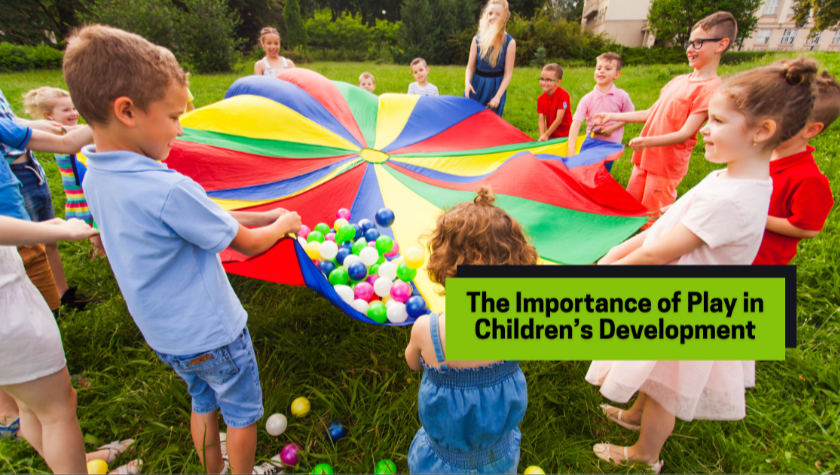
Play is essential for children’s development, supporting brain growth, emotional well-being, social skills, and physical health while helping them learn, explore, and understand the world around them.
Play often looks simple on the surface, blocks scattered on the floor, kids running outside, or imaginary worlds unfolding in a living room. But behind all of that is something powerful. The importance of play for children goes far beyond entertainment. It is one of the primary ways children learn about themselves, others, and the world around them.
From the earliest years, play shapes how children think, move, communicate, and handle emotions. It helps them build confidence, develop curiosity, and form meaningful relationships. When a child pretends to be a doctor, builds a fort, or runs freely outdoors, they are not just having fun, they are practicing real-life skills in a safe and natural way.
In a world that increasingly leans toward structured schedules and screen-based activities, understanding the importance of play for children, and especially the importance of outdoor play for children, has never been more critical. Many children today have less free time than previous generations, and that shift can impact how they develop socially, emotionally, and physically. Making space for play is not just beneficial, it’s necessary.
What Is Play in Early Childhood Development?
Play in early childhood development refers to any activity that is freely chosen, enjoyable, and driven by a child’s natural curiosity. It can take many forms, pretend play, physical play, creative play, or even quiet exploration.
Unlike structured learning, play is not about achieving a specific outcome. Instead, it allows children to experiment, make mistakes, and discover solutions on their own. Whether a child is building a tower, drawing a picture, or playing tag, they are actively learning without even realizing it.
Play can be categorized into different types:
● Unstructured play (free play without rules or guidance) – This is where imagination shines. Children decide what to do, how to do it, and how long to continue.
● Structured play (games with rules or adult guidance) – These include board games or organized activities that teach children how to follow directions and work within boundaries.
● Social play (interacting with others) – Playing with peers or family helps children learn communication and cooperation.
● Solitary play (independent exploration) – This allows children to develop focus, creativity, and self-confidence on their own.
Each type contributes uniquely to a child’s growth, reinforcing the overall importance of play for children. What matters most is balance, giving children opportunities to experience different kinds of play throughout their day.
Why Play Is Essential in Early Childhood Development
Play is not just a break from learning, it is learning. During early childhood, the brain develops at an incredible rate, forming connections that shape future abilities. Play helps strengthen these connections by engaging multiple areas of the brain at once.
Through play, children naturally explore cause and effect. They begin to understand how their actions lead to certain outcomes. For example, when stacking blocks, they learn what makes a structure stable or unstable. When playing with others, they learn how their words and actions affect people around them.
Through play, children:
● Learn how to solve problems
● Develop language and communication skills
● Practice decision-making
● Build resilience and adaptability
The importance of play for children becomes especially clear when we see how it supports both academic readiness and life skills. Children who engage in regular play often enter school with better attention spans, stronger social skills, and a greater willingness to try new things.
Play also allows children to take risks in a safe environment. They can test ideas, fail, and try again without fear of serious consequences. This builds confidence and teaches them that mistakes are part of learning.

Cognitive Benefits of Play for Children
Play fuels brain development in ways that traditional learning alone cannot. When children play, they are constantly thinking, experimenting, and making sense of their surroundings.
For example, building with blocks teaches spatial awareness and basic engineering concepts. Pretend play strengthens imagination and storytelling skills, while also helping children understand different roles and perspectives. Even simple games like puzzles improve memory, pattern recognition, and concentration.
Some key cognitive benefits include:
● Improved problem-solving skills
● Enhanced creativity and imagination
● Better attention span and focus
● Early math and literacy development
The importance of play for children is deeply tied to these mental processes. It lays the foundation for lifelong learning by making discovery enjoyable and meaningful. Children who are encouraged to play often develop a natural love for learning because they associate it with curiosity and fun rather than pressure.
Over time, these cognitive skills extend into academic settings. A child who learns to think critically during play is more likely to approach schoolwork with confidence and creativity.
Social & Emotional Skills Through Play
Play is one of the first ways children learn how to interact with others. Whether they are sharing toys, taking turns, or resolving conflicts, they are developing essential social skills that will stay with them throughout life.
Through group play, children begin to understand:
● Empathy and compassion
● Cooperation and teamwork
● Communication and negotiation
Emotionally, play provides a safe space for children to express feelings. A child acting out a scenario with toys may be processing real-life experiences, fears, or excitement.
The importance of play for children also lies in its ability to build emotional resilience. Children learn how to handle frustration, adapt to changes, and bounce back from setbacks, all through play.

Physical Development and Motor Skills
Physical play is crucial for building strong, healthy bodies. Activities like running, jumping, climbing, and balancing help develop both fine and gross motor skills.
Fine motor skills involve smaller movements, such as holding a pencil, buttoning clothes, or picking up small objects. Gross motor skills involve larger movements, such as running, jumping, and maintaining balance. Both are essential for everyday tasks and overall development.
This is where the importance of outdoor play for children becomes especially significant. Outdoor environments offer space, variety, and natural challenges that indoor settings often cannot provide. Uneven ground, open spaces, and different textures all help children strengthen their coordination and balance.
Benefits of physical play include:
● Improved coordination and balance
● Stronger muscles and bones
● Better overall health and fitness
● Reduced risk of childhood obesity
Outdoor play also exposes children to nature, which has been linked to reduced stress and improved mood. The importance of outdoor play for children extends beyond physical health, it supports emotional well-being as well.
How Parents Can Encourage Healthy Play at Home
Encouraging play doesn’t require expensive toys or elaborate setups. What matters most is creating an environment where children feel free to explore and be themselves.
Here are simple ways parents can support play:
● Provide open-ended toys like blocks, art materials, or dress-up clothes
● Limit screen time to encourage active play
● Spend time playing together to strengthen bonds
● Create safe outdoor opportunities whenever possible
It’s also important to give children unstructured time. Overscheduling can limit their ability to engage in creative and independent play. Sometimes, boredom can actually lead to the most creative ideas.
Parents don’t need to direct every activity. In fact, stepping back and letting children lead their own play can be more beneficial. It allows them to make decisions, solve problems, and build confidence in their abilities.
By prioritizing the importance of play for children, parents can support their child’s development in a natural and enjoyable way, without adding pressure or complexity.
Get Support from NHWS for Your Child’s Development
If you’re looking for additional support, New Horizons Wellness Services offers services designed to help children thrive at every stage of development. From developmental assessments to guided programs, NHWS focuses on nurturing each child’s unique strengths.
Their approach recognizes the importance of play for children as a key part of growth. By combining professional guidance with play-based strategies, NHWS helps children build essential skills in a supportive and engaging environment.
Parents can benefit from expert advice, early intervention services, and personalized plans that align with their child’s needs. Whether it’s improving communication skills, enhancing motor development, or supporting emotional growth, NHWS works alongside families to create meaningful progress. Book a call now!

Frequently Asked Questions
How much time should my child spend playing each day for healthy development?
Children should have several hours of play each day, including both structured and unstructured activities. Free play is especially important for creativity and independence.
What are some easy play activities I can do with my child at home?
Simple activities like drawing, building with blocks, pretend play, storytelling, or even cooking together can be highly beneficial. The goal is meaningful interaction, not complexity.
Is it normal if my child prefers screen time over outdoor play?
Yes, it’s common, especially today. However, it’s important to gently encourage balance by introducing fun alternatives and emphasizing the importance of outdoor play for children.
How can I tell if my child is developing well through their play activities?
Look for signs like curiosity, problem-solving, interaction with others, creativity, and physical coordination. These are strong indicators that your child is learning through play.
At what age does play start to significantly influence a child’s development?
Play begins influencing development from infancy. Even simple activities like reaching for objects, responding to sounds, or interacting with caregivers contribute to early learning and growth.
Yours in Health,
New Horizons Wellness Services8880 SW Nimbus Ave Suite C.,
Beaverton, OR 97008
- https://g.page/newhws
New Horizons Wellness Services provides a true multidisciplinary approach to mental & physical health treatments for children, adults and families.