
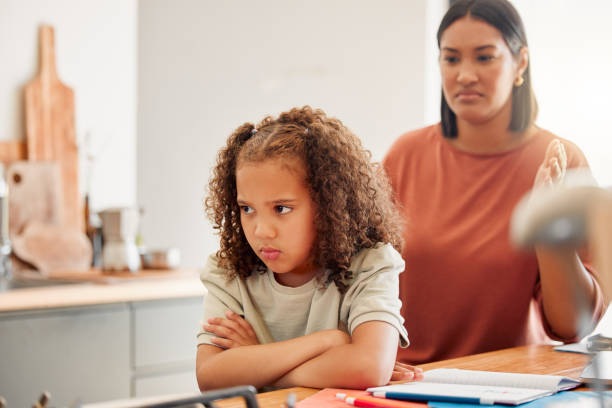
Parenting a Child with ADHD: Helpful Tips for Anger

Parenting a Child with ADHD: Helpful Tips for Anger

Parenting a child with ADHD and anger involves understanding emotional triggers, using proactive strategies, and teaching coping skills to reduce outbursts and support healthier emotional responses.

Difficulty with low frustration tolerance and anger are common facets of ADHD. As a parent it is easy to get entangled in power struggles with your child, especially when you perceive his/her behavior is an attempt to manipulate a situation to get his/her way.

Although tantrums and anger outbursts may appear manipulative, research has suggested that children with ADHD have delayed development in the region of the brain that is thought to govern emotions (limbic system). You may also observe tantrums, explosive anger, and aggression due to delayed development in the region of the brain that is thought to be responsible for allowing children to monitor their behaviors and control their impulses (frontal lobes).

Children with ADHD often overreact to upsets and experience significant difficulty controlling their emotions and impulses to act out their frustration and/or anger. Understanding that anger outbursts may not be an attempt to manipulate a situation can help you stay calm and assist your child in managing his/her frustration and anger in healthy and appropriate ways.

Helpful Tips to with Assist You with this Process

  1. Prevention should always be the first step to helping your child with managing anger. Try to structure your household and community activities as much as possible to prevent anger outbursts and/or tantrums from occurring.
  2. Try to recognize when your child is becoming frustrated/angry. Use your child’s frustration/anger as indication that you need to take a few moments before you respond. Take a few deep breaths; this will give you time to craft a clam and rational response.
  3. If you feel yourself losing control over your words and actions, it is time to take a time out. After you have cooled down you can come back and address the situation.
  4. Let your child know that everyone feels angry from time to time and that it is a normal part of life.
  5. Learning how to manage anger in a healthy and productive manner does not come naturally. It is important that teach your child specific anger management skills.
  6. Teach your child to take several deep breaths when he/she is becoming frustrated or angry. Repeat as necessary until he/she is able to talk or behave in a controlled manner.
  7. Encourage your child to use physical activities (e.g., bike riding, shooting hoops, running, jumping rope, etc.) to workout anger.

We offer counseling and social skills groups to help children cope with symptoms of ADHD. If you or someone you know would like more information contact our office at (503) 352-0240.

Conclusion

Parenting a child with ADHD can be challenging, especially when frequent anger outbursts and low frustration tolerance come into play. It’s important to remember that these behaviors are often rooted in neurological development, not manipulation. Understanding that your child’s emotional regulation may be impacted by delayed brain development can shift your perspective and help you respond with patience and empathy rather than frustration.

By focusing on prevention, modeling calm responses, and teaching specific anger management strategies—like deep breathing or physical activity—you can guide your child toward healthier emotional expression. Keep in mind that learning to manage anger doesn’t happen overnight. It’s a skill that requires consistent support and reinforcement.

You don’t have to navigate this journey alone. At New Horizons Wellness Services, our team offers a wide range of services to support families managing ADHD-related challenges:

Counseling Services help children and parents explore emotions, build self-awareness, and develop practical coping skills to reduce anger and improve communication.

Occupational Therapy Services focus on enhancing self-regulation and sensory processing, both of which are often affected in children with ADHD.

Pediatric Occupational Therapy provides tailored support to help children develop routines, manage frustration, and improve daily functioning at home and in school.

Occupational Therapy for Adults can be beneficial for parents navigating their own executive functioning or emotional challenges, helping them better support their child.

Social Skills Groups offer children a structured environment to practice emotional control, problem-solving, and positive peer interaction.

If you or someone you know would like more information or support, contact our office at (503) 352-0240. Together, we can help your child build confidence and resilience in managing their emotions. Contact us now—we’re here to help you and your family thrive.

Frequently Asked Questions:

Why do children with ADHD seem to have more frequent and intense anger outbursts than other kids?

Children with ADHD often have delayed development in brain regions responsible for emotional regulation and impulse control, such as the limbic system and frontal lobes. This makes it more difficult for them to manage frustration and can lead to sudden, intense anger outbursts even in response to minor triggers.

How can I tell the difference between manipulative behavior and emotional dysregulation in my child with ADHD?

While it may appear that your child is being manipulative, many outbursts are actually a result of emotional dysregulation linked to ADHD. Look for patterns where frustration escalates quickly or is triggered by overstimulation, transitions, or unmet expectations—these often point to neurological challenges rather than intentional manipulation.

What types of professional support are available to help my child manage anger related to ADHD?

Support options include counseling services to help children identify and express emotions appropriately, pediatric occupational therapy to develop regulation and sensory processing skills, and social skills groups where children can practice interacting and coping in peer settings. These services work together to provide structure and tools for long-term emotional development.

Yours in Health,

New Horizons Wellness Services
8880 SW Nimbus Ave Suite C.,
Beaverton, OR 97008

- https://g.page/newhws

New Horizons Wellness Services provides a true multidisciplinary approach to mental & physical health treatments for children, adults and families.