
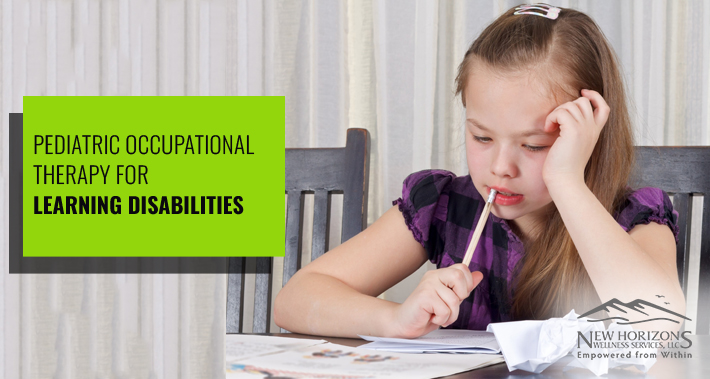
Pediatric occupational therapy for learning disabilities is a service that helps children build motor, cognitive, and self regulation skills needed for learning and school participation.
Raising a child with a learning disability can come with a multitude of unique challenges. But the term “learning disability” is somewhat of a misnomer. Children with learning disabilities face challenges that impact far more than just their academic achievement.
In fact, these challenges can affect your child’s ability to listen, speak, read, write, and solve math problems. Without intervention, learning disabilities can impact your child’s future academic, work, and social achievements. With an average of 1 in 10 children living with a learning disability, more and more treatment options are being discovered.
That’s where we come in. We’re New Horizons Wellness Services, a therapy clinic in Portland with a special interest in pediatric learning disability intervention.
If your child has a learning disability, a pediatric occupational therapist can help. Let’s take a closer look at how.
What is a Learning Disability?
A learning disability describes a gap between your child’s potential and their actual achievement. In other words, children with learning disabilities demonstrate lower than expected skill development despite being of average or above average intelligence. That’s why learning disabilities are often referred to as “hidden” disabilities.
In addition to academic success, learning disabilities can significantly impact multiple areas of your child’s life. According to The National Institute Of Neurological Disorders and Stroke, learning disabilities may impair your child’s ability to:
● Understand or use spoken or written language
● Solve math problems
● Develop their fine motor skills
● Direct attention
This can affect a number of different areas, including:
● Long and short term memory
● Abstract reasoning skills
● Time management skills
● Organizational skills
Learning disabilities can occur in all age groups, including adults and very young children. Many children go undiagnosed until they reach school age whereas others only receive a diagnosis in adulthood. We currently don’t know of any cure for learning disabilities – they’re lifelong conditions that often require ongoing support.

Are There Different Types Of Learning Disabilities?
The Learning Disabilities Association Of America considers learning disabilities to be an “umbrella” term covering a variety of other, more specific learning disabilities. Some children have multiple types whereas others present with just one. Let’s take a closer look at some of the most common types of learning disabilities.
1. Dyscalculia
Dyscalculia is a learning disability which affects your child’s ability to understand numbers and mathematical equations. Signs include difficulty counting backwards, performing mathematical calculations, and understanding place values.
2.Dysgraphia
Dysgraphia impacts your child’s handwriting and fine motor skills. If your child has dysgraphia, you may notice they struggle to write in a straight line and have trouble holding and controlling writing utensils.
3. Dyslexia
Children with dyslexia experience challenges with their reading, writing, and language based processing skills. It results in spelling that’s unpredictable and inconsistent.
RELATED: Dyslexia Awareness Month: How Speech Therapy Can Help
4. Non Verbal Learning Disabilities
Non verbal learning disabilities affect your child’s ability to interpret nonverbal conversational cues, such as facial expression or body language. This may sound similar to autism spectrum disorder, but they’re not the same thing.
What Causes Learning Disabilities?
If your child has a learning disability, there are a number of different potential causes.
These include:
● A family history of learning disabilities
● Fetal alcohol syndrome
● Early childhood abuse or emotional trauma
● Being born prematurely
● Pediatric traumatic brain injury
● Exposure to lead or other poisonous substances
In some cases, however it’s idiopathic – that means we don’t know the specific cause.
How To Tell If Your Child Has A Learning Disability?
All children experience challenges to their learning and development from time to time. However, symptoms lasting for longer than six months may indicate a potential learning disability.
If your child is living with a learning disability, you might notice the following symptoms:
● Difficulty learning to read and write
● Difficulty learning basic math
● Difficulty following instructions
● Poor motor skills
● Poor memory
● Being disorganized and forgetful
● Frequently losing things
● Poor time management
● Acting out, becoming angry, or having large emotional reactions at school or while doing homework
Struggling with the above, especially in a school setting, can be embarrassing for your child. It can cause emotional outbursts in class, including anger or other behavioral issues.
RELATED: How Do I Know If My School Age Child Needs Occupational Therapy?

How Can Pediatric Occupational Therapy For Learning Disabilities Help?
Occupational therapists are experts at helping children develop the skills they need to participate in daily activities, such as self care, play, and learning. They work closely with you and your child in both home and school environments to ensure your child gets the accommodations they need to succeed. Your pediatric occupational therapist can help your child develop effective strategies to help them work around their learning disability and thrive.
Next, we’ll take a closer look at some of the ways an occupational therapist for learning disabilities can help you and your child.
1. Building Self Regulation Skills
Children with learning disabilities often face challenges with self regulation skills. An occupational therapist can help your child better understand and self regulate during triggering moments.
For instance, your child’s occupational therapist can help them practice coping strategies to deal with feelings of frustration in school. The goal is to help your child find methods to keep their body and mind feeling great so they can focus on learning.
2. Building Executive Function Skills
Learning disabilities may impact your child’s executive functioning skills. These refer to your ability to manage your own thoughts, emotions, and actions.
For instance, children with learning disabilities frequently face challenges with staying organized. Your pediatric occupational therapist can help by:
● Breaking tasks into smaller, more manageable chunks
● Teaching physical and mental preparation
● Introducing memory aids, such as cue cards
● Teaching time and pacing techniques
● Developing visual cues and reminders
● Creating routines and putting them into place
3. Building Fine Motor Skills
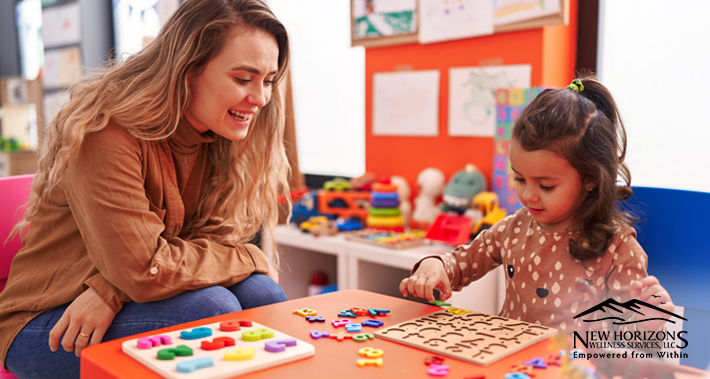
Your child’s fine motor skills help them coordinate small muscle movements, such as holding a pencil. Children with learning disabilities frequently face challenges surrounding their small muscle movements, subsequently making handwriting more difficult.
An occupational therapist can help with:
● Developing their pencil grip
● Improving their sitting posture
● Learning correct letter formation
● Helping them copy other writing, and write their own work
● Keep their core and shoulders stable
● Improving their hand strength and dexterity
● Developing their crossing midline skill
● Organizing their writing and work on paper
4. Building Gross Motor Skills
In contrast, your gross motor skills include the larger movements of your body. This includes things like walking, running, jumping, and others. Since they’re so closely related to fine motor skills, gross motor skills are a common area of difficulty for children with learning disabilities. An occupational therapist can help your child develop their gross motor skills, such as:
● Core strength
● Balance
● Body awareness
● Coordination
● Posture
5. Building Self Care Skills
Last but not least, occupational therapy for children with learning disabilities can help by building self care skills. Your self care skills refer to all of the tasks you do to take care of yourself, such as brushing your teeth, feeding yourself, and using the potty. Occupational therapy can help children with learning disabilities develop these and other self care skills.
This helps them to become more independent as they grow older.
Supporting Children with Learning Disabilities Through Occupational Therapy
Learning disabilities can affect many areas of a child’s development, including academic performance, attention, motor skills, and self-regulation. However, with early identification and the right therapeutic support, children can develop effective strategies to overcome challenges and build the skills they need to succeed at school and in daily life.
At New Horizons Wellness Services, we provide targeted, evidence-based interventions designed to support children with learning disabilities and help them reach their full potential:
● Pediatric Occupational Therapy Services
Our pediatric occupational therapy services focus on improving the core developmental skills impacted by learning disabilities, including fine motor skills, gross motor coordination, sensory processing, executive functioning, and self-regulation. Therapy is individualized to help children build confidence, independence, and academic readiness.
Many children with learning disabilities also experience challenges with peer interaction, communication, and social understanding. Our social skills groups provide a structured and supportive environment where children can practice essential interpersonal skills, build friendships, and improve confidence in social settings.
Early intervention plays a critical role in helping children with learning disabilities develop coping strategies and essential life skills. With consistent support, children can make meaningful progress in both academic and everyday environments.
If you suspect your child may have a learning disability or has already been diagnosed, New Horizons Wellness Services is here to help guide their developmental journey and support long-term success. Book a call now!

Frequently Asked Questions
How can I tell if my child might benefit from pediatric occupational therapy for a learning disability?
Children who struggle with daily tasks like writing, organizing schoolwork, managing time, or performing self-care may benefit from occupational therapy. Persistent difficulty in reading
Are learning disabilities only related to academic performance?
No. Learning disabilities impact more than academics. They can affect fine and gross motor skills, self-care, attention, memory, executive functioning, and social-emotional development. Occupational therapy addresses these broader challenges to help children thrive in multiple areas of life.
What strategies do occupational therapists use to support children with learning disabilities?
Occupational therapists use individualized strategies, such as breaking tasks into manageable steps, visual aids, memory cues, and routines. They also work on fine motor, gross motor, self-care, executive functioning, and self-regulation skills to improve independence and confidence.
How long does it typically take to see progress with occupational therapy for learning disabilities?
The timeline varies depending on the child’s needs, the severity of challenges, and consistency of therapy. Many children show gradual improvement in skills over weeks to months, while others may require ongoing support. Regular assessments help track progress and adjust therapy goals.
Can occupational therapy help children with multiple types of learning disabilities?
Yes. Occupational therapy is highly adaptable and can address overlapping challenges such as dyslexia, dysgraphia, dyscalculia, and non-verbal learning disabilities. Therapists design individualized plans that focus on each child’s strengths and areas of difficulty to maximize overall development.
Yours in Health,
New Horizons Wellness Services8880 SW Nimbus Ave Suite C.,
Beaverton, OR 97008
- https://g.page/newhws
New Horizons Wellness Services provides a true multidisciplinary approach to mental & physical health treatments for children, adults and families.